Planned programme
Stitch Craft & Garment Making
A practical introduction to sewing and garment construction, helping learners turn creative abilities into useful trade skills.
For children whose education has been disrupted by poverty or child labour, catching up at school is a beginning. The next step is building skills that can widen their choices for the future.
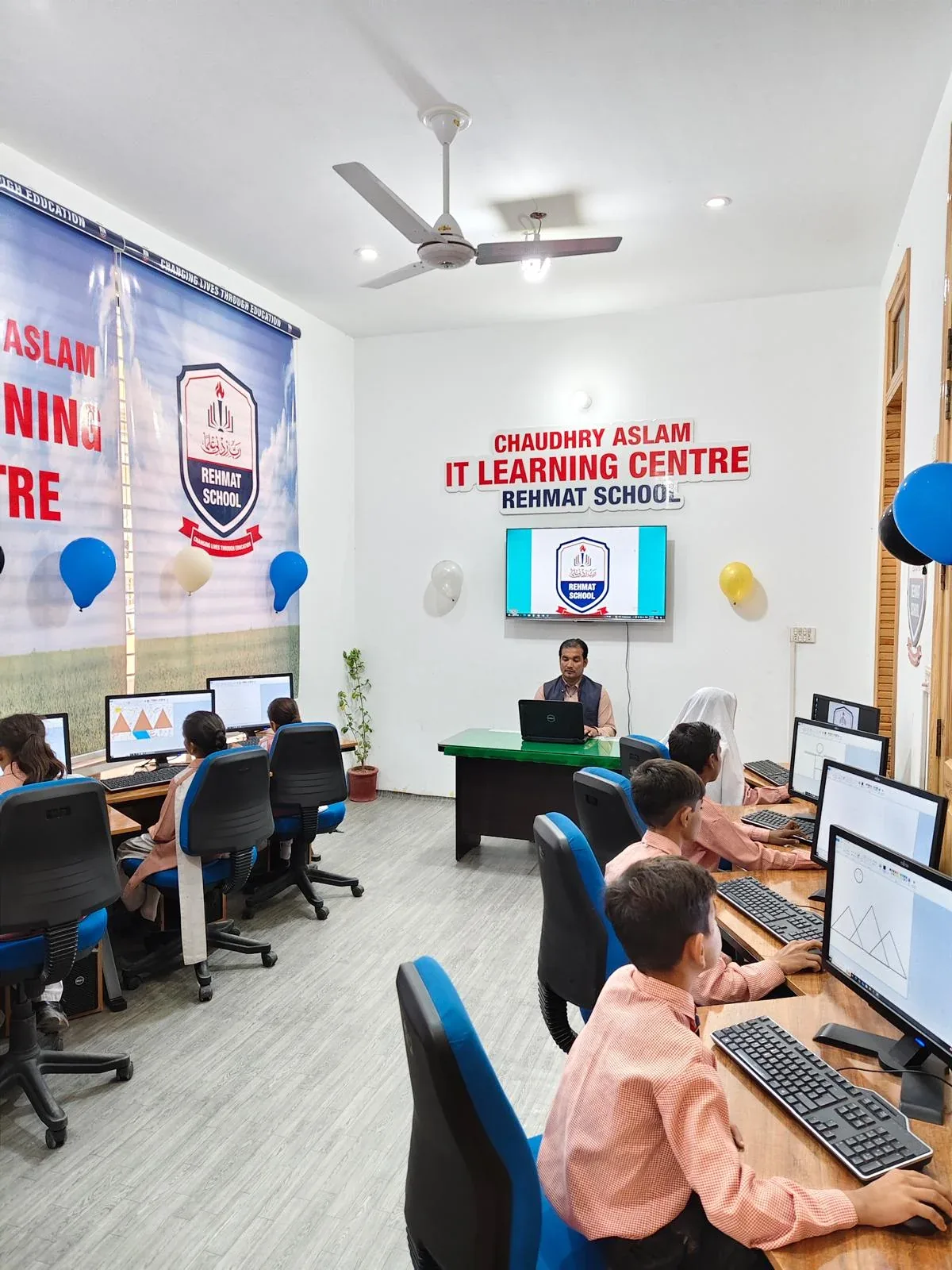
At Rehmat School in Ahmedpur East, computer education is already available through the Chaudhry Aslam IT Learning Centre. We are now working to develop vocational training that will give students further opportunities to build practical skills for the future.
Some of our pupils have worked to help their families meet basic needs. Others have missed school because their families could not afford the costs of education. Opportunities to use computers, explore their interests or consider further study have been limited.
We help open up these opportunities through education and computer learning, while developing vocational training for the future. Our aim is to widen their choices, so the pressures they face in childhood do not determine their opportunities as adults.
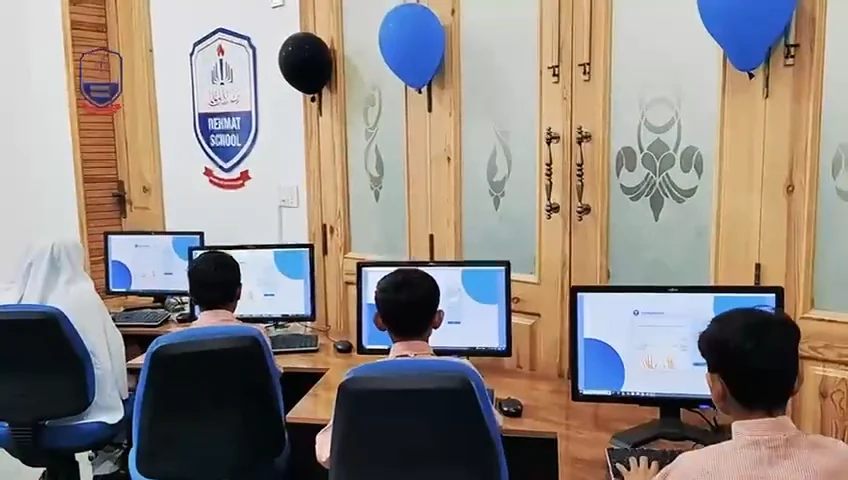
For a child with limited access to technology, the opportunity to learn on a computer can open up an unfamiliar world. Our IT Learning Centre provides modern computers and a supportive setting in which pupils can become familiar with technology.
Computer education complements classroom learning and gives students a foundation on which to build further digital skills. The aim is to make technology something they can use with confidence as they continue their education and prepare for future training.
Established with the support of Chaudhry Aslam’s family, the Centre honours his memory by creating learning opportunities for children at Rehmat School.
Skills alone cannot remove poverty. Combined with education and continued support, they can help young people access opportunities that were previously out of reach.
Digital familiarity and stronger communication can help students take part in further education and training, rather than having their options limited by missed schooling.
Practical abilities can help young people prepare for useful training and, when they are old enough and ready, safer and more sustainable ways to earn a living.
More knowledge, confidence and choice can strengthen a young person’s ability to support themselves and contribute to their family’s longer-term security.
Our aim is to expand future choices. Children’s education and wellbeing come first; skills development supports their progression rather than an early return to work.
There is no single route forward. Following assessment, students can continue their education at a formal school. We are also developing vocational training at Rehmat as a future option for students whose interests and readiness suit practical learning.
Our vocational direction is to connect learning with useful abilities, helping young people prepare for further training and future livelihood opportunities that reflect their interests and circumstances.
We plan to develop the following training programmes to help young people build employable skills. Each pathway would connect practical learning with opportunities for further training, employment or self-employment when learners are ready.
A practical introduction to sewing and garment construction, helping learners turn creative abilities into useful trade skills.
Combining creative design with technology to introduce learners to computer-assisted embroidery and textile decoration.
A proposed progression from basic computer confidence to practical IT skills that learners can apply in further study and future office or service roles.
Practical training in understanding, maintaining and diagnosing desktop and laptop computers, with guided workshop experience.
Foundational electronics training focused on printed circuit boards (PCBs), helping learners understand components and develop careful, practical workshop skills.
An introduction to mobile device servicing that develops careful diagnostic skills, repair techniques and responsible customer service.
An introduction to domestic heating, ventilation, air conditioning and refrigeration, with an emphasis on supervised practice and safe working habits.
A proposed introduction to solar photovoltaic (PV) systems, helping learners build a foundation for further technical training and supervised installation and maintenance work.
These programmes are planned and are not advertised as open for enrolment. Final course content, age and entry requirements, duration, assessment and any qualifications will be confirmed as provision develops. Practical activities will need appropriate facilities, qualified instruction and supervision.
Help develop these training opportunities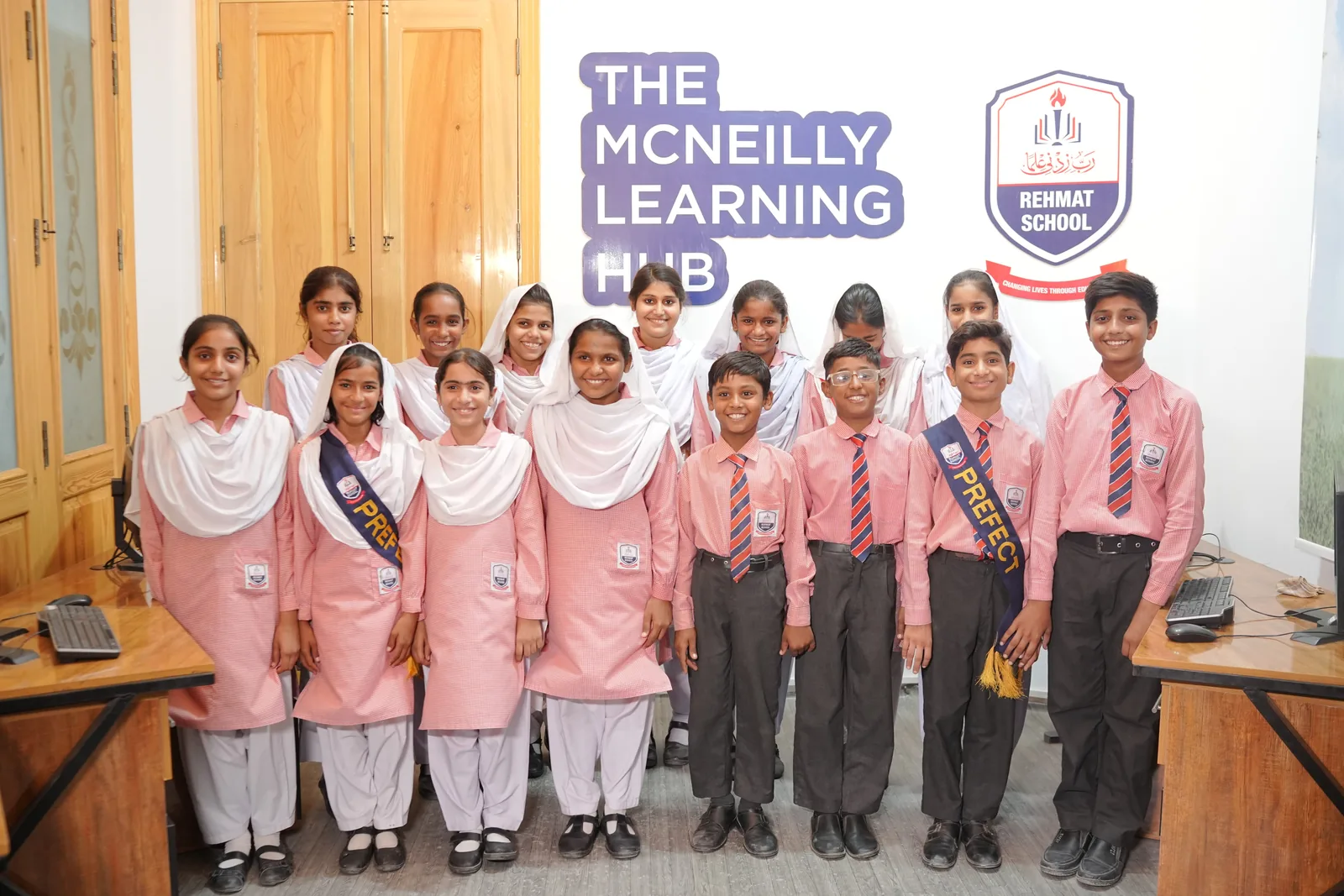
Limited opportunities to practise English can restrict a child’s confidence in unfamiliar learning settings. Through the McNeilly Learning Hub, Rehmat pupils join structured online English-language sessions with students from Caistor Grammar School in the UK.
These exchanges create space to practise speaking, ask questions and discover different perspectives. They complement digital learning by helping children become more confident participants in a connected world.
Explore our UK school partnershipYour support helps sustain the education, resources and encouragement children need to move forward. You can contribute to children’s learning or speak to us about supporting the development of digital and practical training opportunities.
Donations are pooled so support can be directed where it is most needed. To discuss support for a particular area of work, please contact the Foundation.